
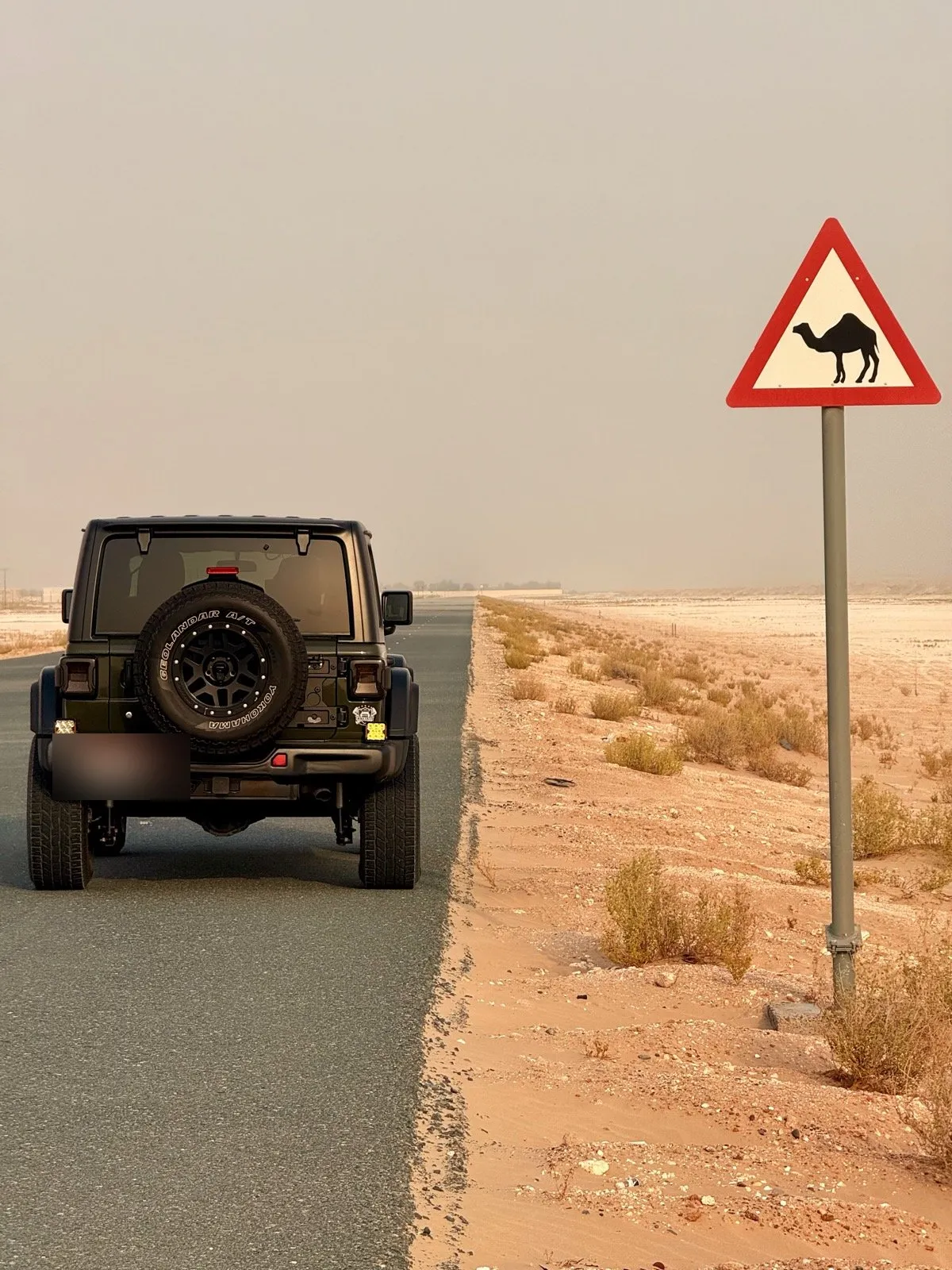
Do you need a permit to off-road in the UAE?
No. There is no special desert-driving licence, and no permit for open desert. If you hold a valid driving licence, you can legally drive off-road. Well-known open-desert areas have historically been free to access with nothing more than that: the public parts of Al Qudra, Big Red / Al Badayer, Sweihan, and the Liwa dunes.
There are two things to add. Permits and bookings do apply inside specific reserves and on private or managed land. And some emirates have rules or permits for overnight camping, which is separate from driving. Camping in wadis and flood-prone ground is being restricted, so check the local municipality before you plan an overnight stay.
Which land can you actually drive on?
Open public desert, and not much else without checking first. The UAE protects a large share of its territory as nature reserves. Inside those, the rules are stricter than in open desert. Some allow regulated visits, some allow access only with a licensed operator, and some are closed to vehicles entirely.
| Type of land | Drive your own vehicle? | What it takes |
|---|---|---|
| Open public desert: Al Qudra public areas, Big Red / Al Badayer, Sweihan, Liwa dunes | Yes | A valid driving licence. No desert permit exists. |
| XQuarry Adventure Park — Mleiha (Sharjah) and Al Ain | Yes, on a booked ticket | A built off-road park rather than open desert. Their site states almost 12 km of 4x4 tracks and 30 built obstacles at Mleiha, and describes the facility as the only one holding a government permit for off-road training — that is their claim, not our verification. Book online before arriving (checked 15 September 2026) |
| Dubai Desert Conservation Reserve (DDCR) | No | Entry through a licensed tour operator only |
| Al Marmoom Desert Conservation Reserve (Dubai) | Partly | Public areas such as Al Qudra Lakes are open. Signed protected zones are not |
| Abu Dhabi protected areas (EAD network) | Varies | Several restrict or forbid vehicles. Check EAD before you go |
| Military and border zones, oil & gas sites, government land | No | Nothing gets you in. Turn around. |
| Private, fenced or signed land | No | The owner’s permission |
Al Marmoom is the one beginners get wrong most often. Parts of it are genuinely open and popular, so people assume the whole reserve is open to drive. It is a conservation reserve. Stay on the open, established areas, and stay out of anything signed.
Which reserves should you recognise by name?
The ones you are most likely to see on a sign. Abu Dhabi’s protected areas were established by Emiri decree under the Sheikh Zayed Protected Areas Network, and there are federal and northern-emirate reserves too. Names worth knowing:
- Al Wathba Wetland Reserve
- The Houbara Protected Area (Al Dhafra)
- Al Maha Nature Reserve
- Al Wohoosh Desert Conservation Reserve
- Marawah Marine Protected Area
- Jebel Hafit and Ain Al Faydah (Al Ain)
- Wadi Wurayah National Park
- Khor Kalba
- Ras Al Khor Wildlife Sanctuary
- Al Zorah (Ajman)
You do not need to memorise the list. You need to react correctly when you see one on a board: stop, and find another way round.
What rules apply everywhere you drive?
These apply whether or not you are anywhere near a reserve.
- Don’t damage the environment. Driving over protected habitat, disturbing wildlife or harming vegetation inside a reserve is a serious offence.
- Never enter or cross a flowing wadi. It is lethal and it is illegal. Driving in flooded areas carries heavy penalties, and vehicles get impounded.
- Camp legally. Follow municipality rules, keep away from wadis and flood-prone ground, and don’t camp inside a protected zone without authorisation.
- Leave no trace. Carry everything out. Littering the desert is an offence and enforcement is increasing.
- Respect access controls. Operator-only and permit-only reserves exist for conservation reasons. Book the proper way instead of sneaking in.
- Stay on existing tracks in sensitive ground. Don’t cut fresh lines across protected land.
A fence, a gate or a sign means no. “The gate was open” is not a defence.
What are the penalties?
Serious enough that guessing is a bad plan. Breaking these rules can mean fines, vehicle impoundment, and in serious environmental cases the possibility of jail. The exact amounts and consequences vary by emirate, vary by the specific decree, and change over time. That is why no fixed figures are quoted here. Treat unauthorised entry into a reserve or restricted zone, any wadi crossing, and any environmental damage as carrying real legal risk.
How do you check before a trip?
- Look up the area on an official source rather than a forum post or a group chat.
- Ministry of Climate Change & Environment (moccae.gov.ae): the federal protected and nature areas list.
- The UAE Government Portal (u.ae): environment and ecosystems, plus the national ecotourism project.
- Environment Agency – Abu Dhabi (ead.gov.ae): Abu Dhabi’s protected-areas network and permits.
- Department of Culture & Tourism – Abu Dhabi (dct.gov.ae) and the relevant emirate’s municipality: for camping and access specifics.
Where an official source and this page disagree, the official source wins. This is general guidance, not legal advice. Signage and the authorities on the ground override everything written here.
The low-risk default
Stick to known open-desert spots. Obey every sign. Never cross flowing water. Take your rubbish home. Book the licensed route for anywhere that requires one. Do that and you stay well clear of trouble, and the desert stays worth driving.