
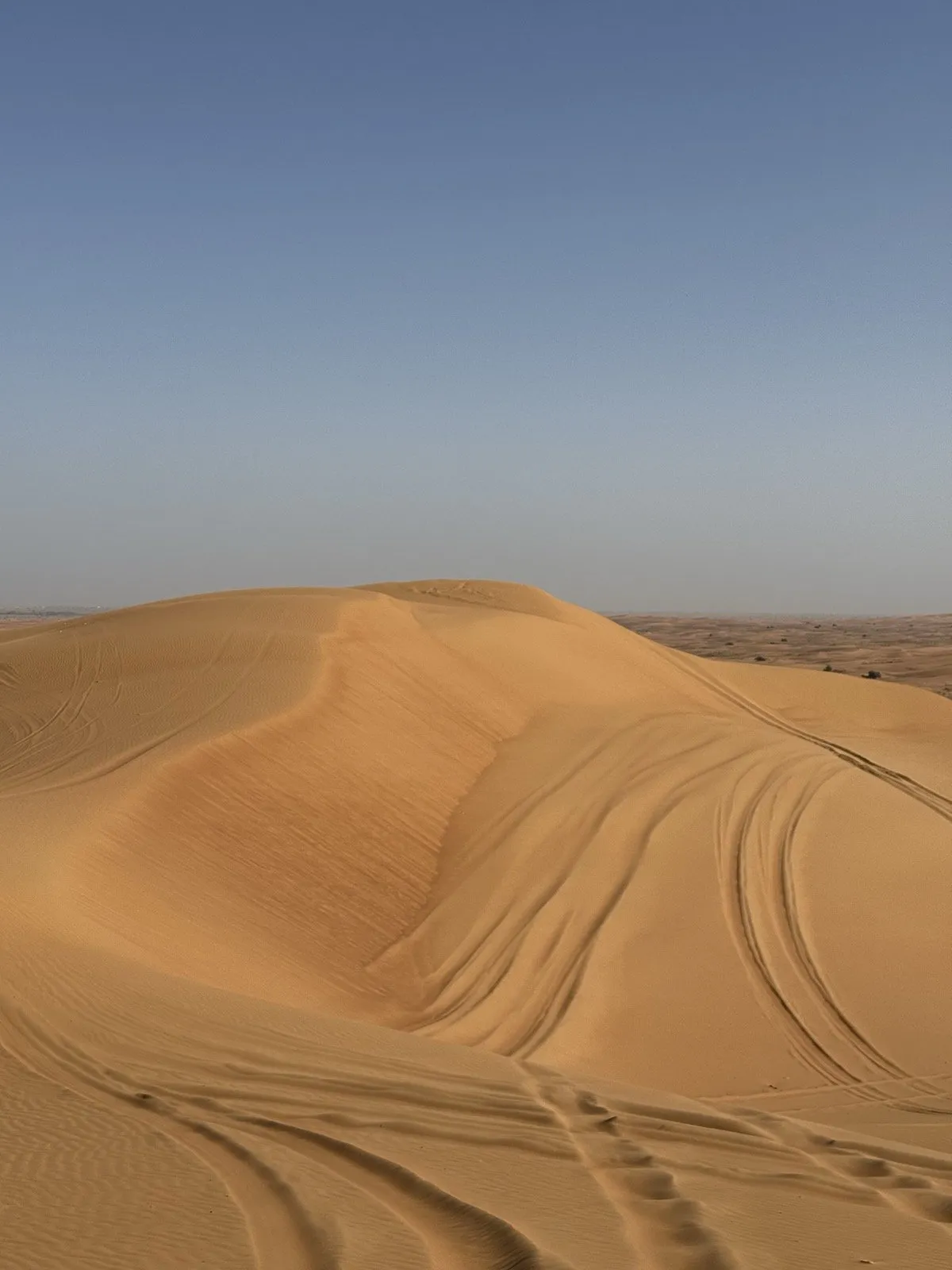
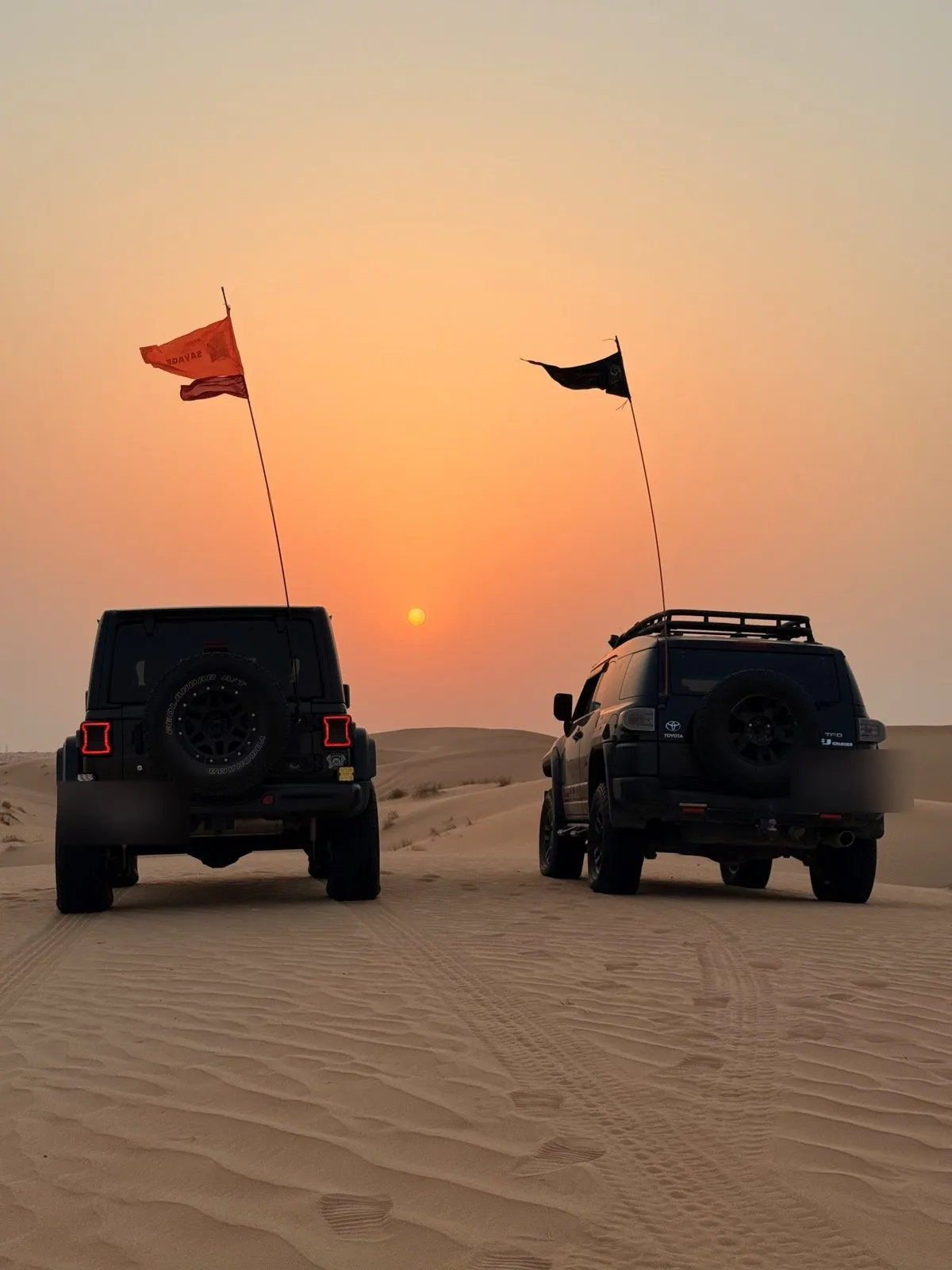
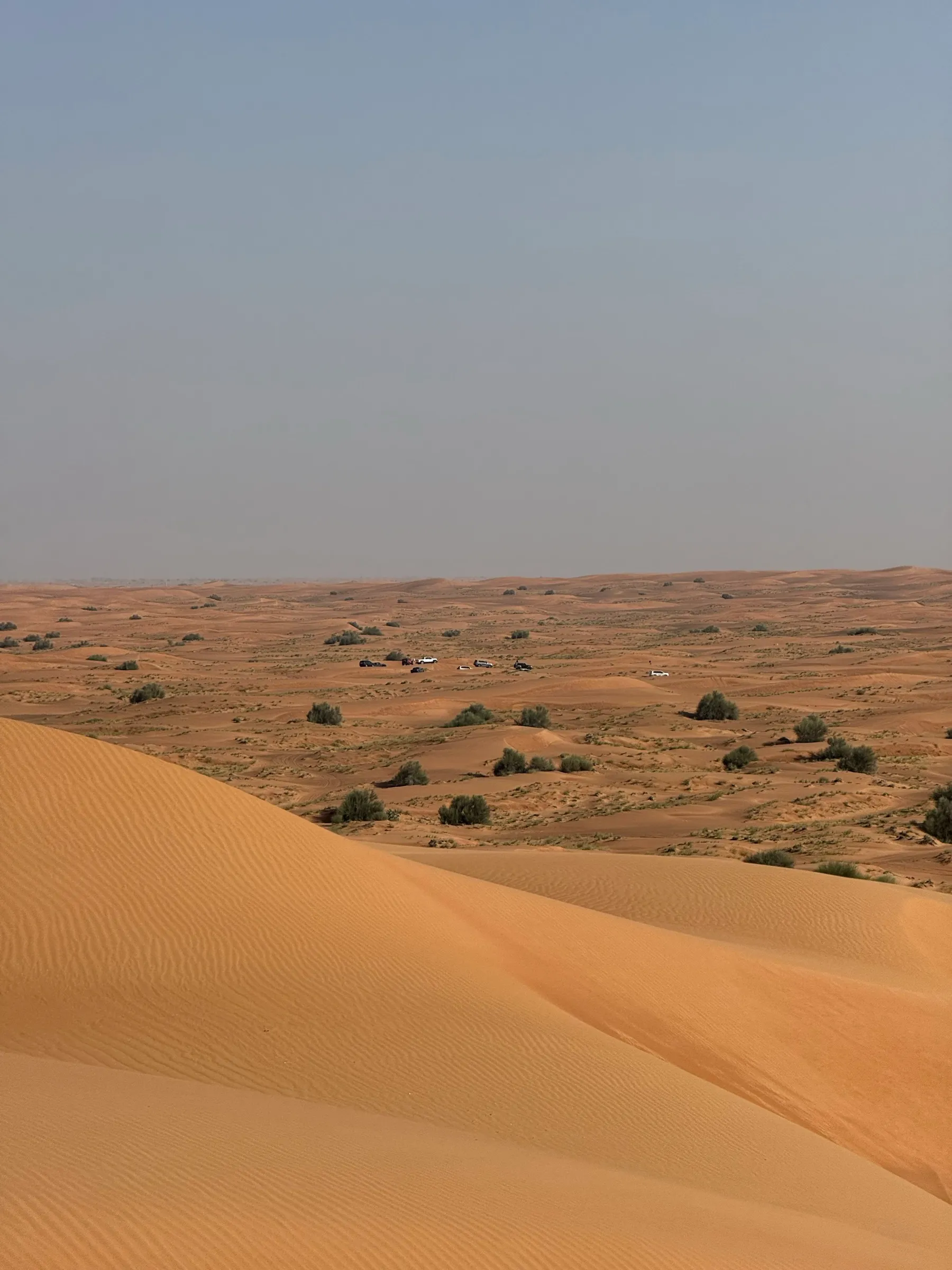
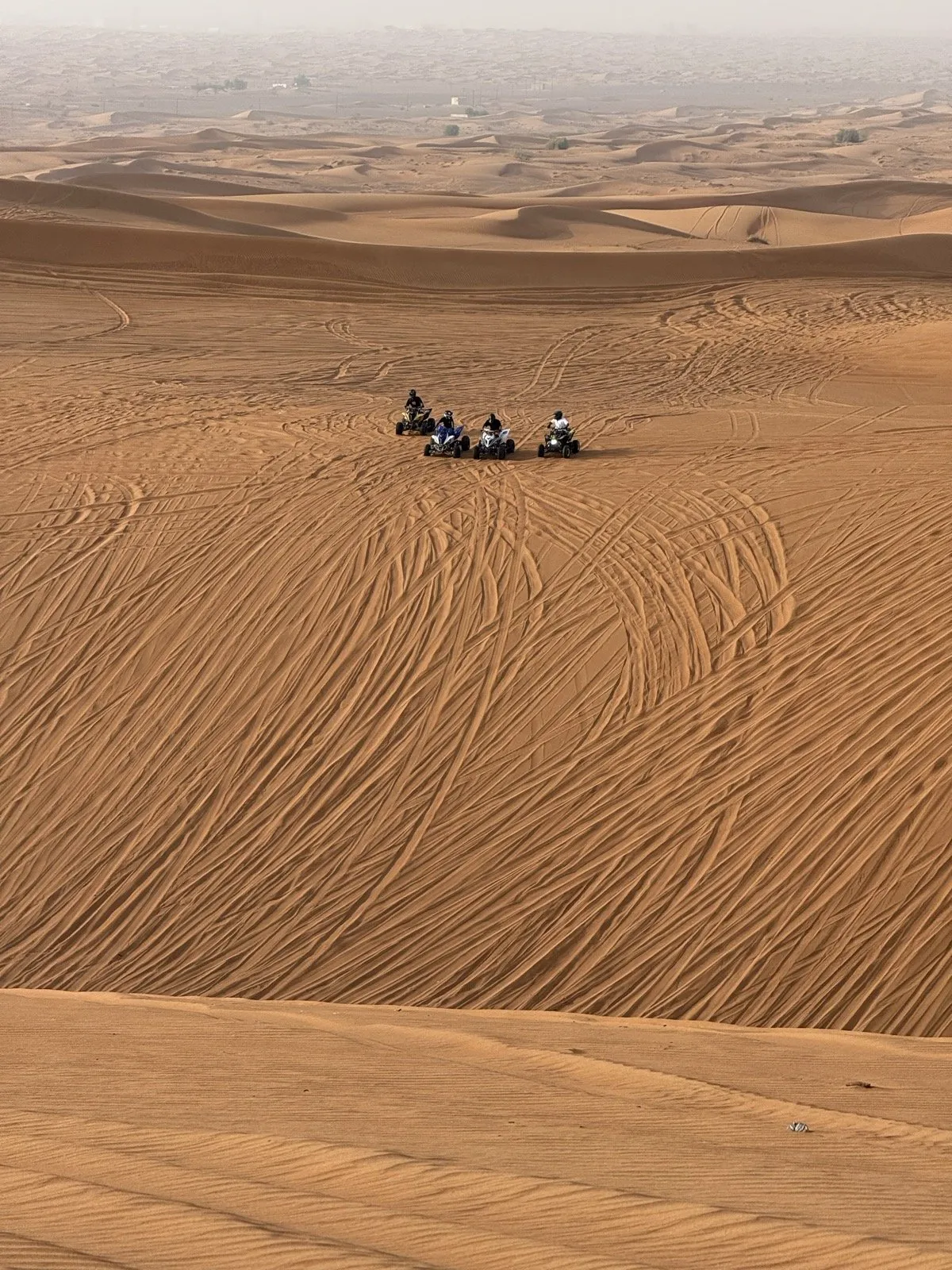
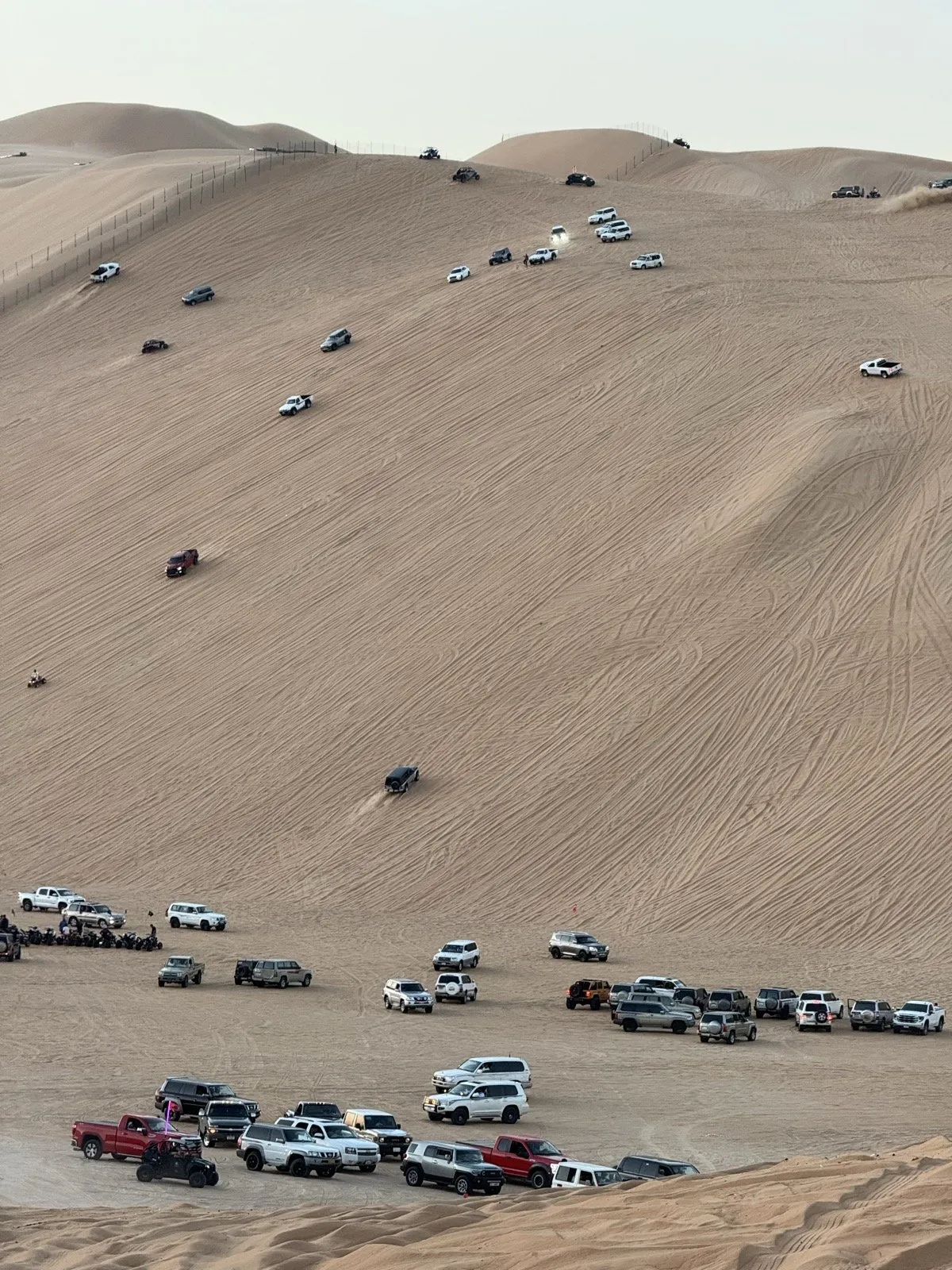
Every spot below is one of the 177 on our public map: 157 in the UAE and 20 across the border in Oman. The grade next to each name is the one the OffroadPal app shows. Difficulty here is indicative, not a measurement. Wind, heat and traffic change a dune between one weekend and the next.
Distances are straight lines from Downtown Dubai or central Abu Dhabi, so the road is always longer. Where one of our guides gives a road figure, we use that.
Which spots are good for a first drive, and which need a convoy?
Start where the dunes are small, other cars are nearby and the tarmac is close. In our data that means three places:
- Al Qudra (Dubai, Beginner). Gentle dunes and open flats around the Al Qudra Lakes, about 40 km from Downtown Dubai. Graded roads reach the lakes, so the tarmac is never far.
- The Al Badayer strip (Sharjah, Beginner). This is the roadside area on the E44 Dubai–Hatta road, with rentals and enclosed beginner areas. Big Red’s main face rises behind it, and that face is not a first-day dune.
- The Al Khazna entrance area (Abu Dhabi, Beginner). This is the gentle edge of the dune field on the E22, about 45–60 minutes from Abu Dhabi city. The official Al Khazna Route through the same desert is rated Advanced, so stay at the edge.
Move to Sweihan once you can climb, crest and come down a dune without drama. Nagrah Hill, the Liwa desert and Tal Moreeb are graded Advanced. Go there in a convoy led by someone who has driven them before. If you have never driven on sand at all, a beginner course first is the shortest route to all of these.
Where can you off-road near Dubai?
Al Qudra is the answer for most people, and Love Lake is part of the same area. The other Dubai pins are either mountain driving (Hatta) or harder sand.
- Al Qudra, Beginner. About 40 km from Downtown Dubai, inside the Al Marmoom Desert Conservation Reserve. There is no permit, gate or fee. Stay on established lines and out of signed protected zones.
- Love Lake, Beginner. This is in the same Al Qudra lake network, about 2 km east of the main lakes. It is an easy first outing, but the conservation-reserve rules still apply.
- Al Faqa Dunes, Intermediate. About 60 km from Downtown Dubai. We have no guide for it yet, so the grade is all the briefing we can give you. Go with someone who knows it.
- Hatta, Beginner at the dam and visitor areas. It is about 130 km and roughly 90 minutes by road, in the Hajar mountains. This is rock, gravel and water, not sand, so you need higher tyre pressures and careful line choice. The Hatta Mountain Conservation Reserve is not open ground.
Which Sharjah spots are worth the drive?
Sharjah’s central region holds the most famous dune in the country, and most of it is about 50 km from Downtown Dubai. Big Red is in Sharjah, not Dubai, even though most write-ups say Dubai.
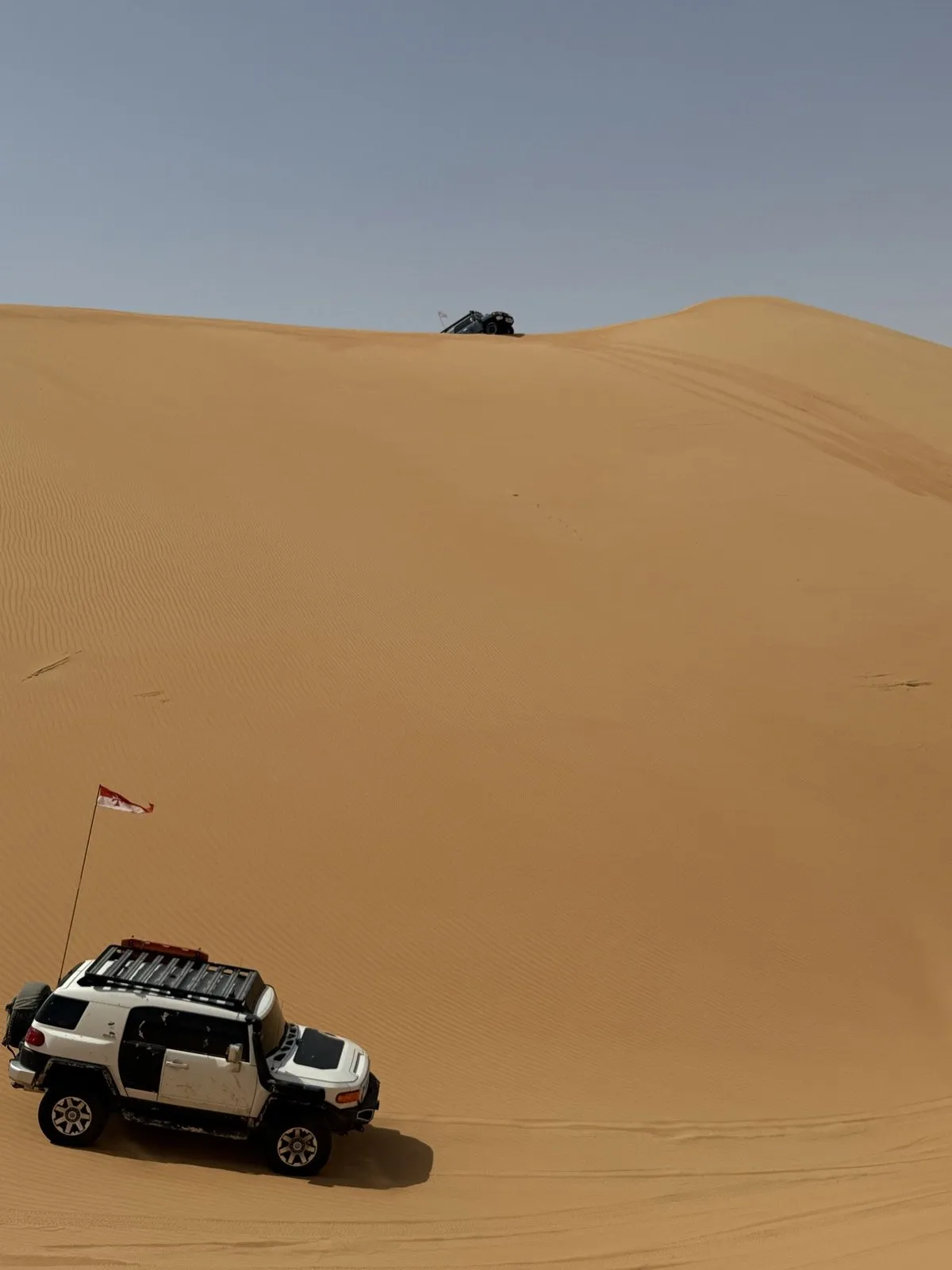
- Big Red, Intermediate. About 55–60 km southeast of Dubai on the E44. The small dunes around the base (our “Big Red bottom” pin) are graded Beginner. The main face is steep, and on weekends the crowd is part of the hazard.
- Al Badayer, Beginner at the strip. Behind the strip is the “sand mountain” country that clubs treat as advanced. Club drives there ask for front and rear tow points and about 10 inches of clearance, which is a good rule to copy.
- Camel Rock, Intermediate. A rock formation shaped like a kneeling camel, about five minutes’ walk from where you park. It makes a good landmark for a day in the Mleiha area.
- Pink Rock, Intermediate. A small limestone hill in the red dunes about 7 km from Big Red. The terrain is moderate rolling dunes. What raises the grade is fast traffic on blind crests.
- Fossil Rock. Read the access note before you plan. Since 2024, much of the area is inside the fenced Mleiha National Park, where you need a permit to drive, and the boundary map has not been published. Ask at the Mleiha visitor centre first.
Where can you off-road in Abu Dhabi and Al Ain?
Abu Dhabi holds most of our map: everything from beginner dune edges an hour from the city to the Empty Quarter. The rule of thumb is simple: the further south and inland you go, the harder and more remote it gets.
- Al Khazna, Beginner at the entrance area. Halfway between Abu Dhabi and Al Ain, about 80 km from the city in a straight line.
- Al Faya, Beginner at our entrance pins. A pale-gold dune field about 60 km from Abu Dhabi city. Clubs drive it hard (“Qudra on steroids”) and make a compressor mandatory. Don’t confuse it with Jebel Faya in Sharjah, which is a different place under park rules.
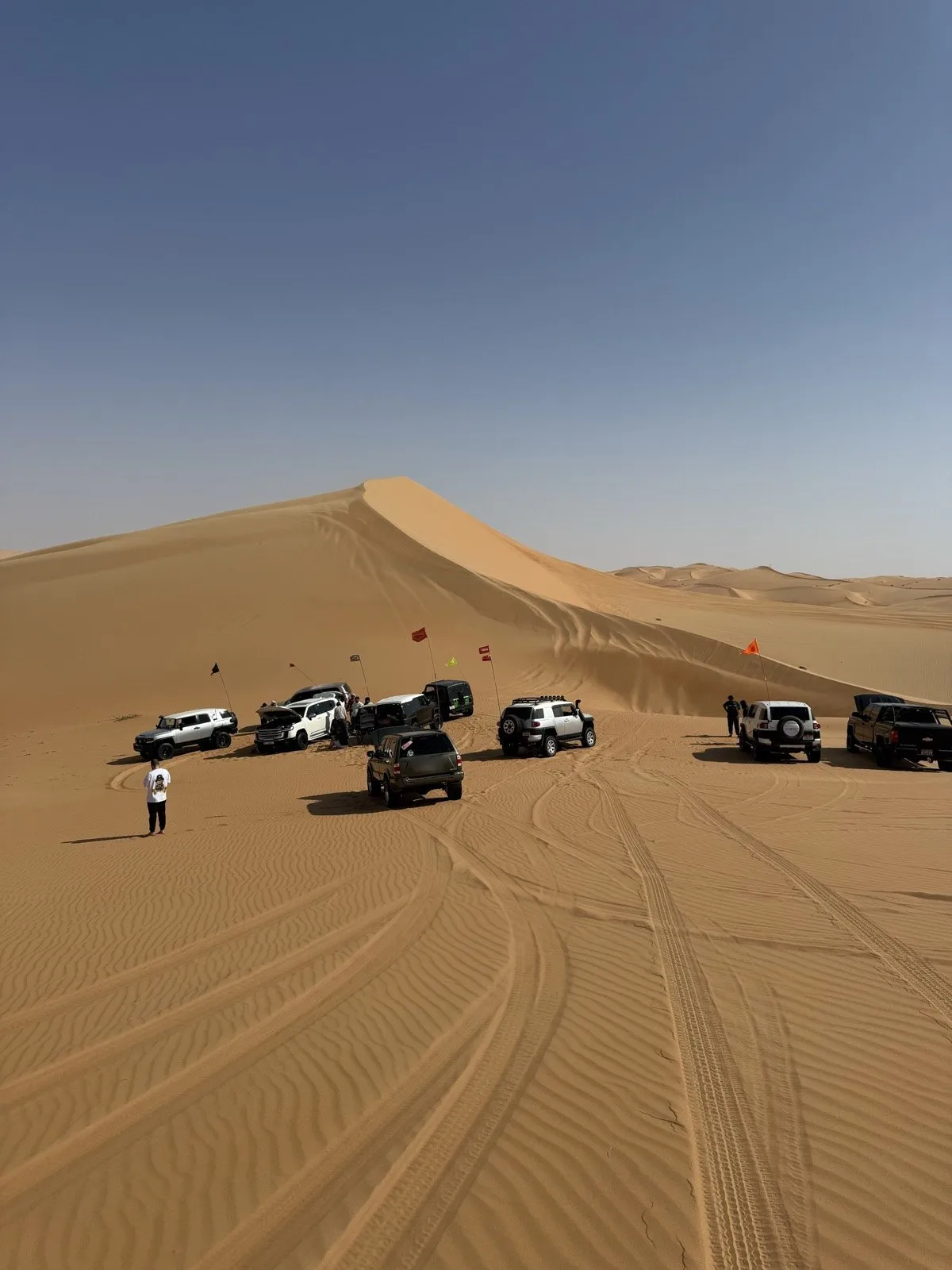
- Sweihan, Intermediate. “Little Liwa”, about 85 km from both Dubai and Abu Dhabi. The dunes are bigger and the sand is softer than at beginner spots. Once you are in, backing out is not easy. This is where you build the skills the deep desert asks for later.
- Nagrah Hill, Advanced. About 30 km from Al Ain. It is the top band in the app, above both Big Red and Sweihan, and it is not a second outing.
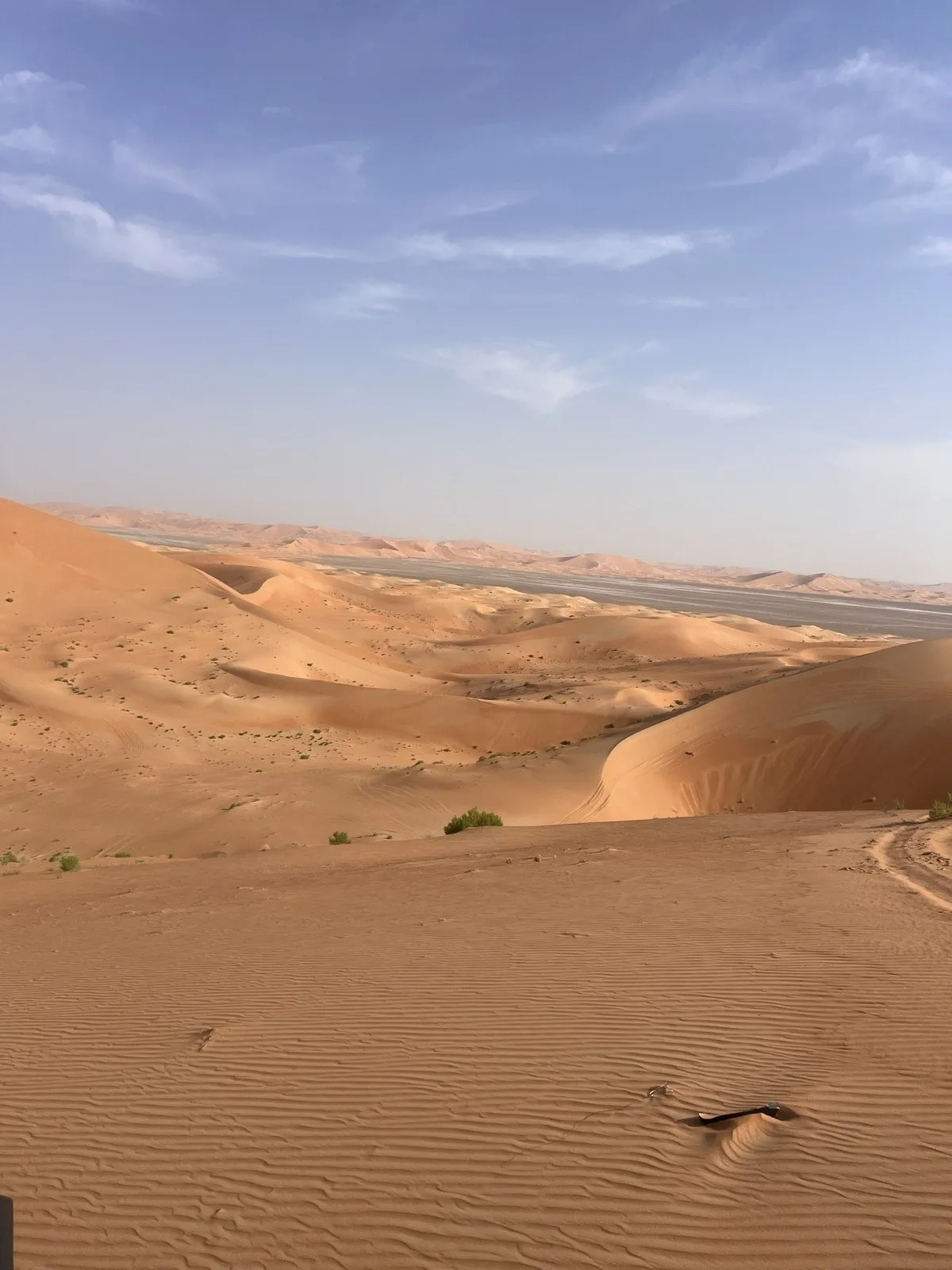
- Al Quaa Milky Way Spot, Advanced in the dunes. It is about 125 km (90 minutes) from Abu Dhabi city. A careful sedan reaches the viewing area on firm ground. The dune belt behind it is a different matter: drivers measure recoveries there in winch-line lengths.
- Liwa and Tal Moreeb, Intermediate at the Liwa Oasis, Advanced beyond it. Liwa is about 240 km by road from Abu Dhabi. The official Liwa Crossing route is 109 km, rated Advanced by Abu Dhabi’s tourism department and planned as a 1.5–2 day trip. Any car can reach the base of Tal Moreeb on a 22 km paved road, but driving the dune is Liwa-grade 4x4 territory.
Also in this region: Hameem, where the official Hameem Loop is rated intermediate by Abu Dhabi’s tourism department but our pins around it are graded Advanced, and Jebel Hafeet, a tarmac road above Al Ain that any car can drive. Abu Dhabi’s six official self-drive desert routes are covered in their own post.
What about Ras Al Khaimah and Fujairah?
The northern emirates are mountain and wadi country, not dune country. Our map has 6 spots in Ras Al Khaimah, 5 in Fujairah, and none yet in Ajman or Umm Al Quwain.
- Jebel Jais, Beginner. The UAE’s highest mountain (1,934 m) is reached by a paved road any car can drive. It is not an off-road spot. The real 4x4 track nearby is Wadi Bih, which is an out-and-back drive. Below-zero winter mornings are on record, so bring a jacket.
- Wadi Naqab, Ras Al Khaimah, Intermediate. About 100 km from Downtown Dubai in a straight line.
- Wadi Ghalilah, Ras Al Khaimah, Advanced. In the far north, about 125 km from Dubai.
- Al Rafisah Dam Reservoir, Fujairah, Intermediate. About 105 km from Dubai.
- Wadi Sidr, Fujairah, Beginner. About 90 km from Dubai.
We have no full guides for the four wadi pins yet, so treat the grade as indicative only. One rule matters more than any grade here: never enter a wadi when rain is forecast. Entering valleys during rain carries a AED 2,000 fine, 23 black points and a 60-day impound under Decree-Law No. 14 of 2024 (Gulf News). Our guide to sandstorms and wadi floods explains why.
Which Oman spots can you reach from the UAE?
Musandam is the closest, and it is still a real international trip. Our map has 20 spots in Oman.
- Musandam and Jebel Harim, Advanced. You cross at Al Darah / Tibat, about 50 km north of Ras Al Khaimah city. You need the right visa for your passport, Omani motor insurance (the Orange Card), your registration papers, and a bank NOC if the car is financed. Rental contracts often forbid the crossing. The graded mountain road climbs to 2,087 m.
- Khor Najd Viewpoint & Inlet, Musandam, Intermediate.
- Jebel Shams View (Intermediate) and Wadi Ghul (Advanced), Ad Dakhiliyah. These are about 185 km from Al Ain in a straight line, so plan them as a multi-day trip.
- Wahiba Sands, Bidiyah Edge, Ash Sharqiyah, Intermediate. Oman’s best-known sand desert, about 470 km from Dubai in a straight line.
- Wadi Darbat, Dhofar, Intermediate. It is near Salalah, more than 800 km away, and is best during the khareef season.
How do the spots compare?
| Spot | Emirate | Difficulty (app grade, indicative) | Good for | Best season |
|---|---|---|---|---|
| Al Qudra | Dubai | Beginner | First air-down drive, lakes, open flats | Cooler months; dawn or late afternoon when hot |
| Love Lake | Dubai | Beginner | Easy first outing in the Al Qudra reserve | October–April |
| Hatta | Dubai | Beginner (dam and visitor areas) | Rock and wadi driving, a different skill from sand | October–April |
| Al Badayer | Sharjah | Beginner at the strip; interior is club territory | Rentals and enclosed beginner areas | October–April |
| Big Red | Sharjah | Intermediate (base pin: Beginner) | Learning on the small dunes around the base | Year round; early or late in hot months |
| Camel Rock | Sharjah | Intermediate | A landmark drive with a short walk | October–April |
| Pink Rock | Sharjah | Intermediate | Rolling dunes, with care on blind crests | October–April |
| Fossil Rock | Sharjah | Intermediate; park permit needed inside Mleiha National Park | Read the access note before you plan | October–April |
| Al Khazna | Abu Dhabi | Beginner at the entrance; official route Advanced | Gentle dune edges between Abu Dhabi and Al Ain | October–April |
| Al Faya | Abu Dhabi | Beginner at our entrance pins | Open dune field near Abu Dhabi city | October–April |
| Sweihan | Abu Dhabi | Intermediate | Building soft-sand skills | October–April |
| Nagrah Hill | Abu Dhabi | Advanced | Experienced groups only | October–April |
| Al Quaa Milky Way Spot | Abu Dhabi | Advanced (dunes); viewing area by careful sedan | Stargazing | Milky Way core late March–September; camping October–April |
| Hameem | Abu Dhabi | Advanced (our pins); official Loop rated intermediate | A self-drive route in convoy | October–April |
| Liwa | Abu Dhabi | Intermediate at the oasis; Advanced beyond | A 1.5–2 day expedition in convoy | October–April |
| Tal Moreeb | Abu Dhabi | Advanced | Seeing the dune; the December festival | October–April |
| Jebel Hafeet | Abu Dhabi | Beginner (tarmac road) | A mountain road drive, not off-road | October–April |
| Jebel Jais | Ras Al Khaimah | Beginner (paved road) | Mountain road; Wadi Bih for 4x4 | Year round; cold in winter |
| Musandam | Musandam, Oman | Advanced | Cross-border mountain trip | October–April |
How far is each spot from Dubai and Abu Dhabi?
Most first-drive spots are within an hour of one of the two cities, and the expedition spots are a full day away. In a straight line:
- Under 60 km from Dubai: Al Qudra and Love Lake (about 40 km), Big Red, Al Badayer, Camel Rock and Pink Rock (about 50 km), and Fossil Rock (about 60 km).
- Under 90 km from Abu Dhabi: Al Faya (about 60 km), Al Khazna (about 80 km) and Sweihan (about 85 km).
- Near Al Ain: Jebel Hafeet (about 15 km) and Nagrah Hill (about 30 km).
- A full day or a weekend: Al Quaa (about 125 km from Abu Dhabi by road), Hameem (about 150 km), Liwa (about 240 km by road), and Musandam (about 130 km from Dubai to Jebel Harim in a straight line, plus a border crossing).
Which of these spots can you camp at?
Several of our pins are named as camping places: the Al Qudra Camping Area and Al Qudra Lakes Campground (Beginner), the Milky Way View Point and Camping at Al Quaa (Advanced), Nagrah Oasis Camp (Advanced) and Al Wagan Tree Camp (Beginner). We don’t list toilets or other facilities until someone has checked them on the ground.
The rules differ by emirate. A weekend tent in the Dubai desert needs no permit, but longer stays need municipal permission (Gulf News). Sharjah fines camping in unauthorised areas AED 2,000 (Khaleej Times). Our desert camping guide covers the rest.
Which spots are OK in summer?
None of the sand spots is a midday summer trip. Al Dhafra, the Liwa region, recorded 51.2 °C in August 2026, and the Sweihan area holds the UAE heat record of 52.1 °C from July 2002 (both figures are from our Liwa and Al Faya guides). In the hot months, keep to a close beginner spot such as Al Qudra or the Big Red base, and only at dawn or late afternoon. The mountain roads at Jebel Jais and Jebel Hafeet are the summer exception for a drive, but they are not off-roading. The comfortable season for everything else runs October to April. Read when not to go and heat and water before any summer plan.
What car does each spot need?
A real 4x4 with low tyre pressure for every sand spot on this page. Ordinary cars reach the edges only.
- Any car: the Al Qudra lakes by graded road, the Big Red strip, the base of Tal Moreeb, the Al Quaa viewing area (firm ground only), Jebel Hafeet and Jebel Jais.
- A 4x4, aired down: Al Qudra and Love Lake sand, Camel Rock, Pink Rock, Al Khazna, Al Faya and Sweihan.
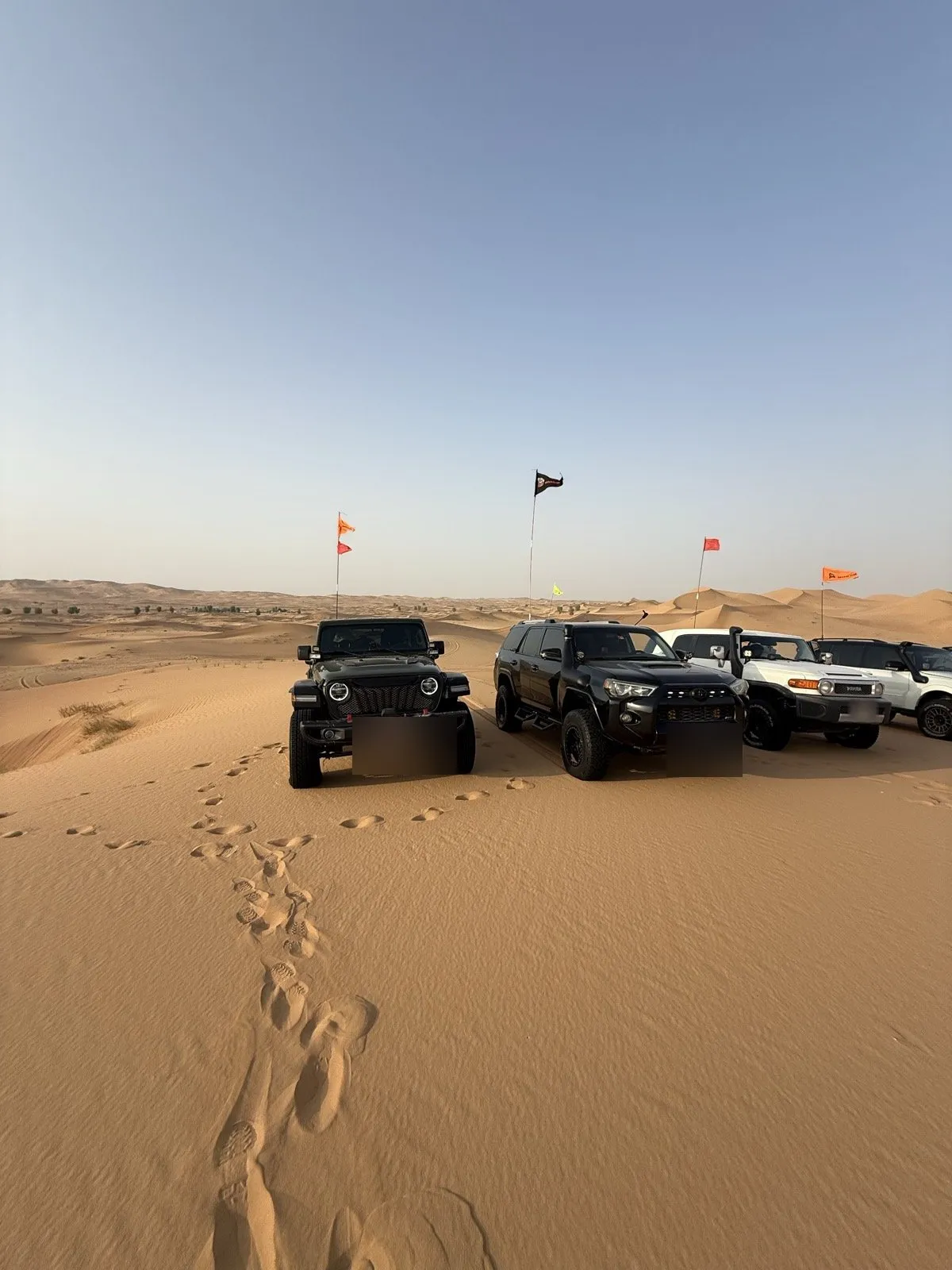
- A prepared 4x4 in convoy: the Al Badayer interior (clubs ask for front and rear tow points and about 10 inches of clearance), Nagrah Hill, Liwa and Hameem. For Hameem area crossings, one documented club rule is “no 100 litres, no drive”.
- Clearance and a checked spare: Hatta’s rock and wadi tracks, where you run higher pressures than on sand, and the Musandam mountain road.
Where do you lose phone signal?
Assume you will lose it anywhere past the tarmac, and plan for that before you leave. Our Musandam guide notes no phone coverage in places on the Jebel Harim mountain road. In the deep desert, signal is never something to count on.
Save the area for offline use in the OffroadPal app while you still have signal, and tell someone your route and the time you expect to be back.
What should you do before any of these drives?
The same five things, every time, whatever the grade:
- Tell someone where you are going and when you will be back, and agree what they do if you are late. Our post on calling for help in the UAE covers what to send.
- Never go alone. Take at least two cars, so one can recover the other. Read convoy etiquette before your first group drive.
- Air down before the sand, and pump back up before the road. See how to air down.
- Carry recovery gear and more water than you plan to drink. Use the desert checklist, and read what to do when you get stuck.
- Check the rules for where you are going. Reserves, a national park and conservation areas cover some of the best-known ground. Read where you can legally off-road.